
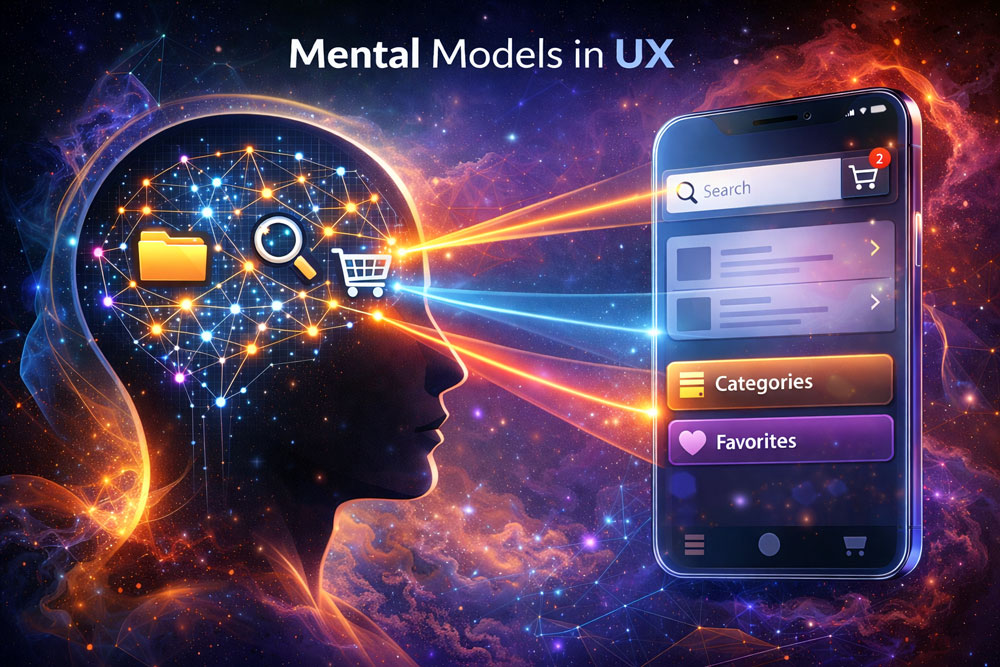
“A mental model is what the user believes about the system at hand. If your user interface does not match the user’s mental model, they will find it hard to use.” — Jakob Nielsen
1. What are Mental Models in UX?
Mental Models are the preconceived notions and beliefs users hold about how a product or system should work. These beliefs are built from their past experiences with other digital products and their interactions with the physical world. Users don’t approach your design with a blank slate; they come with established expectations. When an interface matches their mental model, it feels completely intuitive.
2. The Core Concept: The Mental Model Mismatch
A Mental Model Mismatch occurs when the designer’s conceptual model (how the system is built to work) does not align with the user’s mental model (how the user assumes it works).
-
When a user thinks a red button means “Cancel,” but it actually means “Delete.”
-
When a user looks for a “Save” button in a system that auto-saves their progress.
-
When a user swipes left expecting to go to the previous screen, but the action archives an item instead.
When you bridge this gap by designing for how the user already thinks, you eliminate friction and prevent user errors.
3. Key Takeaways for UX Designers
-
You Are Not Your User: As a UX designer, you know too much about your own product’s architecture. Never assume that users share your technical understanding or internal logic.
-
Research First, Design Second: You cannot design for a mental model you haven’t uncovered. Use methods like card sorting, user interviews, and usability testing to map out exactly how your users categorize information.
-
Bridge the Gap with Onboarding: If your product introduces a completely new way of doing things that contradicts existing mental models, you must use clear visual cues, tooltips, and interactive onboarding to help users build a new mental model.
4. Real-World Examples
-
The Desktop Metaphor: Early computer operating systems used icons of physical “Folders,” “Files,” and a “Trash Can.” This helped users instantly understand digital storage by matching the mental model of a physical office.
-
Digital Wallets: Apps like Apple Wallet or Google Pay use visuals of physical credit cards stacked together. Users instantly know how to select a card because it mirrors how they interact with a real-life wallet.
-
Digital Reading Apps: The page-curl animation or sliding interaction in e-readers perfectly aligns with the physical mental model of turning a page in a real book.
5. When Should You Break This Rule?
Shifting mental models is risky, but it is sometimes necessary for true innovation. For example, the transition from physical phone keyboards to multi-touch glass screens completely shattered existing mental models, but it introduced a far superior experience. If you must break an established mental model, ensure the new interaction is significantly better, and provide ample guidance to help users adapt.
Summary for Designers
“Design for the user’s reality, not your system’s architecture.” By thoroughly understanding and aligning with your users’ mental models, you reduce cognitive load and create experiences that feel instantly natural and effortless to navigate.

